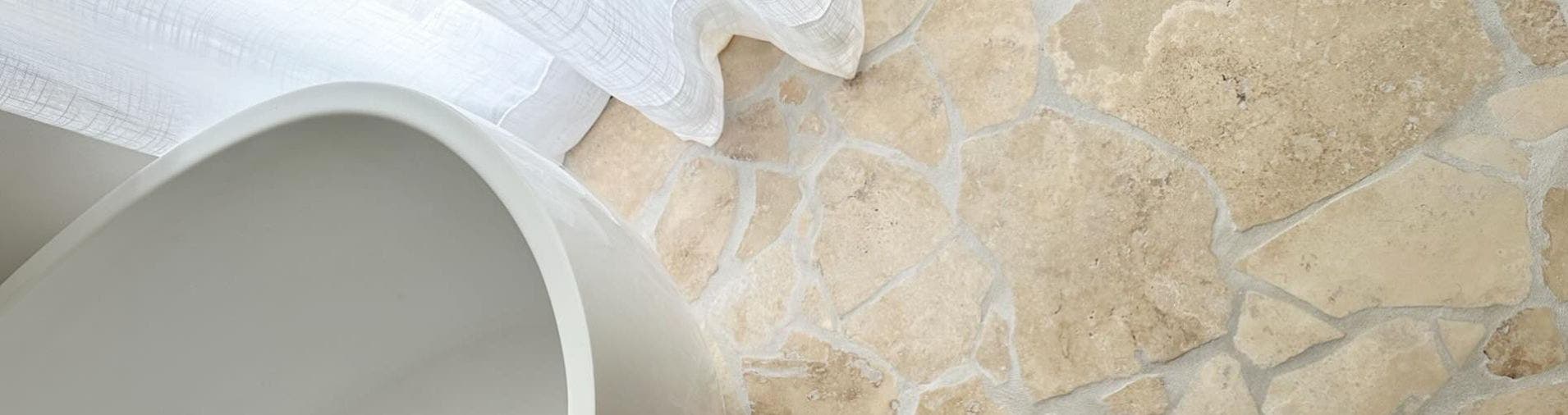
The Unique Aesthetic of Crazy Paving and Crazy Pavers
Crazy paving delivers an organic, free-form layout that feels custom and naturally composed. The irregular, interlocking pieces create movement across the surface, a natural contrast to uniform paving. Crazy pavers introduce texture and personality to patios, garden paths, and alfresco areas while still delivering structure and durability.
Durable Stone Crazy Paving for the Australian Climate
Despite its organic layout, crazy stone paving is highly durable when crafted from robust natural materials. The irregular pieces sit securely once installed, forming a stable surface suited to year-round exposure. Natural stone handles harsh sun, rain, and temperature changes with minimal fading, delivering long-term outdoor performance.
Design Versatility: Where to Lay Crazy Pave Tiles
Crazy pave tiles suit a wide range of outdoor settings, from courtyards and feature patios to stepping-stone paths and garden transitions. Their irregular shapes soften straight lines in modern landscapes and feel equally at home in traditional, rambling gardens. Used thoughtfully, they add texture, movement, and a sense of place.


Understanding the Installation of Crazy Pave
Installing crazy pave is both technical and creative. Each piece is carefully positioned to achieve balance while maintaining consistent joint spacing. A well-prepared base and secure grouting are essential for stability and drainage. Professional installation ensures the finished surface is level, cohesive, and built for long-term outdoor performance.
Caring for Your Crazy Stone Paving
Crazy stone paving is naturally robust and well-suited to outdoor conditions. Routine sweeping and occasional washing with a pH-neutral cleaner help maintain its appearance. Sealing is recommended for many natural stones, offering added protection against stains while enriching the stone’s natural tone and texture.
Choosing the Right Pavers for Your Outdoor Vision
Crazy paving offers a distinctive alternative to standard, uniform formats, bringing texture and individuality to outdoor design. As a premium option, it suits feature areas where character matters. Explore Amber’s complete range of pavers to compare materials, finishes, and styles that align with your landscape and budget.
Discover Your Ideal Crazy Paving and Visit an Amber Showroom
Browse Amber’s crazy paving range online to explore available stones, colours, and finishes for your project. Visit your local showroom to view larger samples in person and speak with our team for tailored advice on selecting the right solution for your outdoor space.
Featured Crazy Pave Products
FAQs
Is crazy paving suitable for pool surrounds and wet areas?
Yes. When installed using natural stone such as travertine, crazy paving provides natural slip resistance and remains comfortable underfoot. This makes it a practical and attractive option for pool surrounds and wet outdoor zones.
How do you properly install crazy pave tiles to ensure a seamless finish?
Successful installation relies on thorough base preparation, careful placement of each piece, and professional grouting. Proper technique helps crazy paving tiles form a stable, level surface with a cohesive and long-lasting finish.
What makes crazy stone paving a durable option for the harsh Australian climate?
High-quality natural crazy stone paving is inherently durable. It resists fading, handles strong UV exposure, and performs well through temperature changes and seasonal weather, making it well-suited to Australian outdoor conditions.
Do crazy pavers require special sealing or maintenance to keep them looking new?
Sealing is often recommended, particularly for natural stone, to help protect crazy pavers from stains and moisture. Routine cleaning with a mild, pH-neutral solution helps maintain colour and surface integrity over time.
Can crazy pave be used for driveways or high-traffic areas without cracking?
Crazy pave can be used in high-traffic areas when the correct stone thickness and base preparation are selected. Professional installation is advised to confirm the surface can handle load-bearing demands without movement or cracking.